The Nassau County Court system serves as the primary legal structure for handling judicial matters across Nassau County, New York. It manages a wide range of cases, including criminal charges, civil disputes, and county-level legal proceedings. Residents, businesses, and legal professionals rely on these courts for fair case handling. The system operates under New York State law while addressing local legal needs. Courts work within set jurisdictions to keep cases organized. This approach supports consistency across the county.
The Nassau County courts form an interconnected local court system designed to manage cases efficiently. Each court type focuses on specific legal issues, which helps cases move through the process without confusion. Facilities are mainly located in Mineola, the county seat. Judges and court staff handle filings, hearings, and case decisions every day. Nassau County NY courts rank among the busiest in the state outside New York City. This steady activity shows their ongoing role in maintaining legal order.
How to Use the Nassau County Court Record Search URL
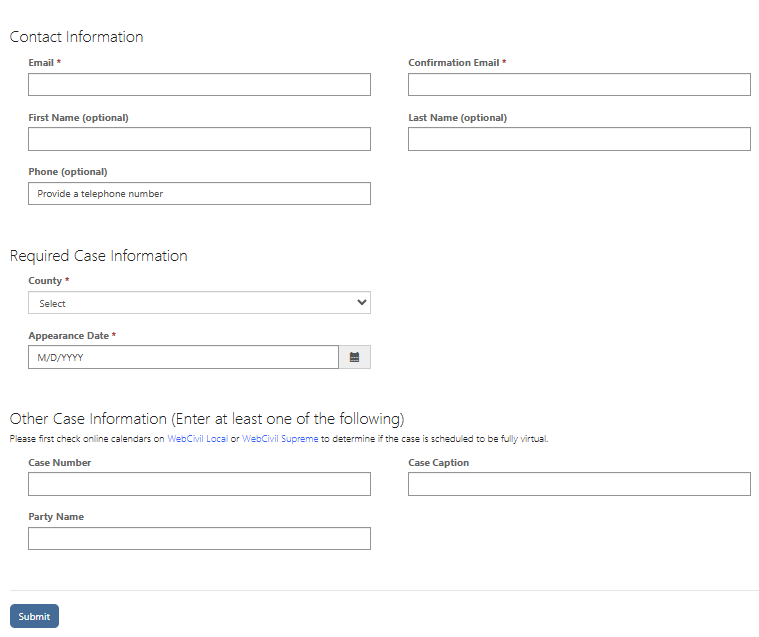
The Nassau County Court Record Search Tool helps users search court cases by name, case number, or court type. Follow the steps below in order for accurate results.
Official link: https://portal.nycourts.gov/virtual-appearance-view-request/
Open the Search Page
Visit the official court records page using the link above.
On the homepage, choose “Civil Case Records” or “Criminal Case Records” based on the case type.
Select Nassau County
From the county drop-down menu, select Nassau County.
This filters results to Nassau County courts only.
Choose the Court Type
Pick the court where the case was filed:
- Supreme Court
- County Court
- District Court
- Family Court (limited public data)
Selecting the correct court improves result accuracy.
Enter Search Details
Users can search using one of the following:
- Full name (last name first works best)
- Partial name for broader results
- Case number for direct lookup
Avoid punctuation and extra spaces.
Apply Date Filters
Use filing date ranges to narrow results.
This helps when searching common names.
Run the Search
Click the search button to view matching records.
Results usually load within seconds.
Types of Courts in Nassau County
Nassau County courts are organized by case type and legal authority, with each court handling specific civil, criminal, or family matters. Knowing which Nassau County court handles a case saves time and helps people follow the correct legal process. Nassau County has several courts with different jurisdiction rules. Each court focuses on certain case types, from serious felony cases to small claims disputes. The sections below explain how each court works and what cases it hears.
Nassau County Supreme Court
The Nassau County Supreme Court holds broad legal authority and handles the most serious cases in the county. It serves as a trial-level court, not a limited or appellate court. This court hears major civil cases involving high-dollar disputes or complex legal issues. It also manages felony criminal cases after indictment.
Jurisdiction and authority include:
- Civil lawsuits with no monetary limit
- Felony criminal trials
- Matrimonial cases such as divorce
- Article 78 proceedings against government agencies
Civil vs criminal jurisdiction
Civil matters often involve contract disputes, personal injury claims, medical malpractice cases, and commercial litigation. Criminal matters include felony charges such as burglary, robbery, or serious assault.
Common case examples:
- Personal injury lawsuits exceeding lower court limits
- Commercial contract disputes
- Felony indictments transferred from lower courts
- Divorce actions with property division
Nassau County Family Court
The Nassau County Family Court focuses on family law cases involving children and household relationships. This court does not hear divorce cases, which remain in Supreme Court. Family Court addresses sensitive matters that affect daily family life and child welfare.
Primary case types include:
- Child custody and visitation
- Child support enforcement
- Child neglect and abuse petitions
- Family offense matters
- Guardianship cases
Family law matters
Judges in Family Court review evidence related to child safety, parental responsibility, and household stability. Many cases involve social services agencies or court-appointed advocates.
Common examples of family law cases:
- Custody disputes between parents
- Support modification requests
- Allegations of child neglect
- Orders of protection within families
Nassau County Criminal Court / District Court
The Nassau County Criminal Court, often operating through the District Court, handles lower-level criminal cases and early felony proceedings. This court manages high case volume and serves as the entry point for many criminal matters.
Criminal cases in Nassau County handled here include:
- Misdemeanors
- Violations and infractions
- Preliminary felony hearings
- Arraignments and bail hearings
Misdemeanors and violations
Misdemeanors and violations make up a large portion of criminal cases heard in Nassau County courts. Misdemeanor charges often involve offenses such as petit larceny, driving while impaired, simple assault, or trespassing. These cases may carry possible jail time, fines, probation, or mandatory programs. Violations involve lower-level offenses like disorderly conduct, open container violations, and most traffic matters. Violations do not result in criminal records, yet courts still impose fines, surcharges, license points, or community service depending on the charge.
Preliminary felony hearings
Preliminary felony hearings begin in the District Court or Criminal Court following arrest and arraignment. During this early stage, judges review charges, set or adjust bail, issue temporary orders of protection, and schedule future court dates. Prosecutors present initial evidence to establish probable cause before the case advances. Once felony proceedings move forward, cases transfer to Nassau County Supreme Court for further hearings and trial. This early court process helps manage case flow, protect legal rights, and maintain orderly movement of serious criminal cases through the county system. Felony cases start in District Court for arraignment. Judges decide bail, issue temporary orders, and schedule hearings before cases move to Supreme Court. The Nassau County Criminal Court plays a key role in early case processing and case flow control within the county system.
Nassau County Civil Court & Other Specialized Courts
The civil court in Nassau County handles lower-dollar civil disputes and routine legal conflicts between parties. Common cases include contract disputes, property damage claims, and consumer-related disagreements. These courts focus on efficiency, simplified procedures, and quicker case movement. Many cases resolve through settlements or short hearings. The goal is to provide fair outcomes without lengthy litigation or complex trial processes.
Civil Court case types include:
- Small claims disputes
- Consumer debt cases
- Landlord-tenant matters
- Contract claims within set limits
Small Claims Court Nassau County
Small Claims Court in Nassau County allows people to resolve everyday disputes in a simplified setting without hiring attorneys. These cases often involve unpaid debts, property damage, or contract disagreements between individuals or small businesses. Claim limits usually cap at a few thousand dollars, keeping cases focused on minor financial disputes. Hearings follow relaxed procedures and move quickly. Judges aim to reach fair outcomes based on basic facts rather than formal legal arguments.
Common small claims cases involve:
- Unpaid loans
- Property damage
- Service disputes
- Security deposit issues
Housing-related cases
Housing-related cases in Nassau County courts focus on disputes between landlords and tenants. Common matters include nonpayment proceedings, lease violations, holdover cases, and disputes over habitability conditions. These cases address unpaid rent, unauthorized occupants, lease term expirations, and claims involving unsafe or unlivable housing conditions.
Specialized problem-solving courts
Nassau County also operates courts focused on rehabilitation and supervision, such as:
- Drug treatment courts
- Mental health courts
- Veterans treatment courts
Jurisdiction of Nassau County Courts
Nassau County court jurisdiction defines which court can hear a case based on location, case type, and dollar value. Filing in the correct court depends on geographic boundaries, subject matter jurisdiction, and case value thresholds. Jurisdiction sets the legal authority of each Nassau County court. These rules decide where a case starts and which judge has power to issue orders.
Geographic Jurisdiction in Nassau County
Geographic jurisdiction explains where a court may exercise authority based on physical location. Nassau County courts only hear cases connected to specific places within the county. Geographic jurisdiction refers to the physical area a court covers. Nassau County courts handle cases tied to events, property, or parties located within Nassau County, New York.
A case usually falls within Nassau County court jurisdiction if:
- The incident happened in Nassau County
- The property involved sits in Nassau County
- One or more parties live or conduct business in Nassau County
Subject Matter Jurisdiction and Legal Authority
Subject matter jurisdiction defines what type of cases a court may hear. Each Nassau County court has limits based on its assigned legal authority. Subject matter jurisdiction limits courts to certain case types. Each Nassau County court has defined legal authority.
Examples include:
- Supreme Court hears major civil cases and felony criminal cases
- Family Court hears custody, support, and neglect matters
- District Court hears misdemeanors and preliminary felony cases
- Civil Court hears small claims and lower-dollar disputes
Case Value Thresholds and Filing Limits
Case value thresholds determine which court may hear a civil lawsuit. These limits prevent lower courts from handling high-dollar disputes. Case value plays a major role in court selection. Monetary thresholds separate lower courts from higher courts.
Common thresholds include:
- Small Claims Court: limited dollar amounts
- Civil Court: capped monetary limits
- Supreme Court: no maximum dollar limit
How Jurisdiction Affects Where a Case Is Filed
Jurisdiction rules shape where and how a case begins. Courts review jurisdiction early to confirm proper filing. Jurisdiction rules shape every filing decision. Choosing the wrong court can slow progress or end a case early.
Filing depends on three core factors:
- Location tied to the dispute
- Type of legal issue involved
- Monetary value or charge severity
Case Types Handled by Nassau County Courts
Nassau County court cases include civil disputes, criminal charges, family matters, traffic violations, and probate issues. Each case type follows different procedures based on court jurisdiction and legal authority. Nassau County courts handle thousands of filings each year across multiple legal categories. These cases affect finances, freedom, family structure, and property rights. Knowing how case types are divided helps people identify the correct court and filing process. The sections below explain how each category functions within the Nassau County court system.
Civil Cases
Civil cases focus on legal disputes between parties rather than criminal punishment. These matters usually involve money, property, or contract rights. Civil courts review evidence, hear testimony, and issue financial judgments or court orders. Many cases resolve through settlements before trial. Court placement depends on claim value and dispute type.
Common civil cases in Nassau County courts include:
- Personal injury claims
- Contract disputes
- Property damage lawsuits
- Consumer debt actions
- Landlord-tenant disputes
Criminal Cases
Criminal cases involve alleged violations of state or local law. Prosecutors bring these cases on behalf of the government. Criminal courts focus on public safety, legal accountability, and sentencing outcomes. Case severity determines court placement and potential penalties.
Typical criminal cases in Nassau County include:
- Misdemeanor offenses
- Felony charges
- Violations and infractions
- Bail hearings and arraignments
Family Law Cases
Family law cases address household relationships and child welfare matters. These cases require careful judicial review due to their personal impact. Family Court handles ongoing oversight, support enforcement, and protective orders. Judges often work with social services and court-appointed representatives.
Common family law cases include:
- Child custody and visitation
- Child support enforcement
- Family offense petitions
- Child neglect proceedings
- Guardianship of minors
Traffic and Violation Cases
Traffic and violation cases involve non-criminal offenses tied to driving or local regulations. These cases move through the court system quickly. Judges review citations, driving records, and evidence such as radar data or officer testimony. Outcomes often include fines or license penalties.
Examples include:
- Speeding tickets
- Traffic signal violations
- Driving without insurance
- Parking summons disputes
Probate and Guardianship
Probate and guardianship cases focus on estate management and care decisions. These cases often involve detailed paperwork and court supervision. Surrogate’s Court oversees these matters to protect assets and vulnerable parties. Judges review wills, financial records, and medical reports.
Typical cases include:
- Estate administration
- Will validation
- Executor appointments
- Adult guardianship petitions
Nassau County court records and why they matter
Nassau County court records are official documents created during court cases that show filings, decisions, and case activity. These records matter since they document legal actions and confirm what happened in court. Nassau County court records serve as written proof of court proceedings. Courts create and store these records during every stage of a case. People, businesses, and agencies rely on them for verification, reference, and legal review.
What Are Nassau County Court Records?
Nassau County court records are legal records produced by courts during civil, criminal, and family cases. Judges, clerks, and court staff generate these records as part of the judicial process. Court records may include filings from both parties and rulings issued by the court. Each record connects to a specific case number and court location. These documents remain part of the permanent court file unless sealed by law. Judicial documents reflect case progress from filing through resolution. Courts store them electronically or in paper form, depending on record age and type.
Types of Court Records Available
Nassau County courts maintain many record categories. Each type serves a different legal purpose. Some records show basic case details. Others contain full filings or signed judicial decisions. Availability depends on court type and case status. Civil and criminal records appear in different systems. Family-related filings follow separate record rules.
Common Nassau county court records include:
- Case indexes and summaries
- Complaints and petitions
- Motions and responses
- Court orders and judgments
- Sentencing records
- Hearing calendars
Public Court Records vs Restricted Records
Public court records in Nassau County include many filings and case details that remain open for public review. These records often cover civil lawsuits, criminal case outcomes, traffic cases, and docket information such as court dates and motions. Members of the public may review these records without special permission through online case searches or courthouse clerk offices. Public access supports transparency and helps people track case progress, confirm legal actions, or verify court outcomes.
Public records may include:
- Case titles and numbers
- Party names
- Filing dates
- Final judgments
Restricted judicial documents may involve:
- Juvenile cases
- Adoption proceedings
- Sealed criminal matters
- Certain family court records
Fees, Processing Times & Record Restrictions
Court record access in Nassau County involves set fees, variable processing times, and legal limits on certain records. Public records Nassau County courts maintain remain available in many situations, though sealed and confidential cases follow strict controls. Courts manage record requests through standardized procedures. These rules help maintain transparency while protecting sensitive information. Costs and timelines depend on record format, court location, and request method.
Court Record Access Fees
Court record access fees apply when requesting physical copies, certifications, or record searches without an index number. Online case summaries usually appear at no cost, though detailed documents require payment. Fee amounts depend on the type of request and document status. A name-based search triggers a search fee since staff must manually review indexes. Copy fees apply per page, and certification fees confirm authenticity for legal or official use.
For Nassau County court records, common fees include:
- Index or name search: $5.00 per name for each two-year period searched
- Non-certified copies: $0.65 per page (minimum $1.30)
- Certification of copies: $0.65 per page (minimum $5.20)
- Certified copies: $1.25 per page (minimum $5.00)
- Exemplification: $10.00 plus certification fees
Processing Times for Record Requests
Processing times vary based on request complexity and court workload. Online case lookup systems display available information immediately after submission. In-person requests move faster when records remain on site. Certified copies or large files require extra review steps, which can extend timelines. Mail requests add delivery time on top of processing.
Typical timeframes include:
- Immediate results for online searches
- Same-day processing for basic copies requested in person
- Two to five business days for certified copies
Sealed Records and Confidential Cases
Not all Nassau County court records qualify as public. Courts restrict certain files to protect privacy, safety, and legal rights. Sealed records remain hidden from public view unless a judge issues permission. Confidential cases involve sensitive matters where disclosure could cause harm or violate statute.
Restricted record categories often include:
- Juvenile delinquency cases
- Adoption proceedings
- Certain criminal records
- Family court files involving minors
What to Know Before Requesting Records
Preparing in advance helps the court record request process move faster and with fewer issues. Requesters should confirm the exact court and division where the case was filed, since records remain with the court that handled the matter. Bringing a valid photo ID is often required for in-person requests, especially for certified copies or sensitive filings. Providing complete and accurate case details improves search speed and reduces extra fees. Full legal names, case numbers, and approximate filing dates help clerks locate records quickly. Requesters should also plan for copy fees, possible wait times, and limits on sealed or confidential cases, which may require special authorization.
Overview of Nassau County Courts
Nassau County courts operate as part of the New York Unified Court System, with each court assigned specific legal authority and case responsibilities. The structure follows a clear hierarchy that directs cases from lower courts to higher courts based on subject matter and severity. The Nassau County NY courts system supports fair case handling through defined roles and clear court placement. Each court fits into a broader framework that promotes consistency, efficiency, and lawful decision-making across the county.
How the Nassau County Court System Is Structured
Nassau County courts function within the statewide New York Unified Court System, which standardizes court operations across all counties. This structure sets uniform rules, procedures, and administrative oversight. Courts divide responsibilities by case type rather than appeal level alone. Trial courts handle most filings, hearings, and trials. Appellate courts review decisions if a party challenges a ruling.
Core goals of the structure include:
- Clear case assignment
- Predictable legal authority
- Consistent court procedures
- Efficient case movement
Hierarchy of Nassau County Courts
The hierarchy of Nassau County courts reflects the seriousness of cases and the subject areas each court handles. Lower-level courts manage high-volume matters such as traffic violations, misdemeanors, and small civil disputes. These courts resolve cases quickly and handle routine legal issues that arise within the county. Higher courts address complex civil lawsuits, felony criminal cases, and matters with greater legal impact. This structure helps cases move in an orderly way through the Nassau County court system and clarifies where filings and hearings take place.
Primary courts within Nassau County include:
- District Court: misdemeanors, violations, traffic matters
- Civil Court: lower-dollar civil disputes and small claims
- Family Court: custody, support, neglect, and family offense cases
- Supreme Court: major civil cases, felony criminal cases, divorces
- Surrogate’s Court: estates, probate, and guardianship
Role of the New York Unified Court System
The New York Unified Court System oversees staffing, budgeting, and court administration. This system supports training, technology systems, and record management across Nassau County courts. Statewide oversight helps courts follow consistent filing rules, scheduling practices, and public access standards. Court clerks and judges follow the same administrative framework used throughout New York. This centralized system supports fairness and reliability across county lines.
How Structure and Hierarchy Affect Court Users
Court structure directly shapes where a case begins and how it moves through the system. Filing in the correct Nassau County court helps avoid rejected paperwork, repeated filings, and scheduling setbacks. Each court has defined legal authority, so placement affects timelines, required forms, and hearing procedures.
Court hierarchy determines how much authority a court has over a case. Lower courts handle initial filings, routine hearings, and limited-scope matters. Higher courts issue binding rulings on complex disputes and serious criminal charges. If a party challenges a decision, hierarchy controls where the appeal goes and which court reviews the record.
Court hierarchy influences three key areas:
- Where cases start: Most cases begin in trial-level courts based on case type and value.
- Which court issues final decisions: Higher courts resolve complex matters and issue final judgments.
- How appeals progress: Appeals move upward through the system, following strict procedural rules.
Nassau County Courts at a Glance
The table below shows how court levels align with case responsibilities. This snapshot helps users quickly identify where a case belongs.
| Court Level | Primary Function |
|---|---|
| District / Civil | High-volume, limited-scope cases such as misdemeanors, traffic matters, small claims, and lower-dollar disputes |
| Family / Surrogate’s | Relationship-focused and estate matters including custody, support, probate, and guardianship |
| Supreme Court | Complex civil cases, felony criminal cases, and divorce actions |
| Appellate Division | Review of lower court rulings for legal or procedural errors |
Nassau County Court Locations & Addresses
Nassau County courts operate from several courthouse buildings across the county, with the main courthouse located in Mineola. Each Nassau County court location serves specific case types, making it important to visit the correct building.
Main Courthouse
Nassau County Supreme Court
100 Supreme Court Drive, Mineola, NY 11501
Supreme Court and County-Level Matters
- 100 Supreme Court Drive, Mineola, NY 11501
Handles major civil cases, felony criminal cases, and matrimonial matters.
Family Court
- 101 County Seat Drive, Mineola, NY 11501
Handles custody, child support, neglect, and family offense matters.
District and Criminal Court
- 99 Main Street, Hempstead, NY 11550
Handles misdemeanors, violations, traffic cases, and early felony proceedings.
City and Local Courts
- Glen Cove City Court, Glen Cove, NY
- Long Beach City Court, Long Beach, NY
Frequently Asked Questions
Nassau County court records include many public legal documents created by county courts, though some files remain restricted. Availability depends on case type, court level, and privacy rules set by Nassau County courts. This section answers common questions people ask about Nassau County court records and court operations. The content follows a clear question-and-answer format suited for People Also Ask results and FAQ schema.
Are Nassau County court records public?
Many Nassau County court records are open to public review. Public records often cover civil disputes, criminal case outcomes, traffic matters, and court calendars. These records support transparency and allow the public to review court activity. Some records remain restricted. Family law cases involving children, juvenile matters, sealed criminal files, and certain matrimonial documents do not appear in public searches. Courts limit these records to protect privacy and sensitive details.
How can someone search Nassau County court records?
Court records may be searched online or in person through the appropriate Nassau County court. Online systems usually allow searches by party name, case number, or court type. These systems often display case summaries, filing dates, and hearing schedules. In-person searches take place at the clerk’s office where the case was filed. Court staff direct visitors to public access terminals or provide request instructions for physical files.
What types of records do Nassau County courts keep
Nassau County courts maintain judicial documents tied to their legal authority. These records include civil case filings, criminal case dispositions, family court orders, probate filings, estate matters, and traffic case summaries. Each court stores records connected to the cases it hears. Record availability depends on the court handling the matter and the nature of the case.
How long are Nassau County court records kept?
Record retention periods vary based on case type. Many civil and criminal case files remain available for years. Cases involving property rights, serious offenses, or long-term legal outcomes often stay on record permanently. Older records may move to archive storage. Archived files usually take longer to retrieve.
Can sealed or confidential records be accessed?
Sealed court records do not appear in public searches and are restricted from general public access. Only parties directly named in the case, their legal representatives, or individuals with a valid court order may view these records. Confidential records commonly involve sensitive matters such as adoptions, child protection cases, family court proceedings, juvenile cases, or mental health–related hearings.
Do Nassau County courts charge fees for records?
Nassau County courts may charge fees for copies, certifications, or mailed record requests. Standard copy fees usually apply on a per-page basis, and certified copies cost more than regular photocopies since they include an official court seal. Fees vary by court type, such as Supreme Court, Family Court, or District Court, and may differ for older archived files. Viewing court records at public computer terminals inside the courthouse often carries no charge. Costs increase when a requester asks for certified documents, extensive file searches, or retrieval from off-site storage.
La flessibilità dei limiti di giocata è ciò che rende i siti non AAMS così attraenti.
Gracze, którzy cenią zaufanie i przejrzystość, chętnie wybierają NV Casino.
Bloklanma hallarından qaçmaq üçün alternativ mostbet giriş ünvanları təqdim edilir.
Wejdź na vox kasyno i ciesz się najlepszą rozrywką oraz grami.
Yeni qoşulan istifadəçilər mostbet tərəfindən böyük bonuslarla qarşılanır.
Lemon Casino PL
В 1xBet иногда можно найти необычные события, которые добавляют азарт к спортивному календарю.
Milyonlarla insanın etimad göstərdiyi pin up casino günü-gündən genişlənir.
Unisciti alla community che utilizza i casino online migliori per scommesse sicure.
Assicurati di sfruttare i codici promozionali esclusivi dei casino online migliori raccomandati.
Néha a legjobb online casino is végez előre bejelentett karbantartást a csendesebb éjszakai órák folyamán a még stabilabb, gyorsabb működés érdekében.
Betonred Casino CZ
Zákaznická podpora Mostbet je dostupná nepřetržitě prostřednictvím online chatu a e-mailu.
El análisis de cuotas deportivas y sistemas de retiro rápidos en casas de apuestas españa refleja un mercado cada vez más competitivo.
A transparência do casino online portugal é fundamental para a manutenção de uma relação duradoura.
Parolunuzu unutmusunuzsa, mostbet giriş pəncərəsində asanlıqla yeniləyə bilərsiniz.
1хбет букмекерская контора и казино
22bet casino Cesko
casino som inte är anslutet till spelpaus
Yeni strategiyaları sınaqdan keçirmək üçün mostbet ən doğru yerdir.
Most reputable Glory casino bloggers recommend starting with small betting amounts.
Fontan Casino Polska
Lemon casino Poland
Służba wsparcia technicznego działa na NV Casino w trybie 24/7.
Häufig integrieren neue Wettanbieter detaillierte Statistiken direkt neben den Quoten für Eishockey-Spiele.
Pārdomāts un ērts izkārtojums palīdz šim Latvijas kazino piesaistīt arvien vairāk jaunu lietotāju.
För information om uttag, betalningar och spelupplevelse kan du använda casino utan svensk licens snabba uttag som en hjälpsam resurs.
Рабочее зеркало, быстрый вход и доступ к играм обеспечены в Кент казино с учётом требований пользователей.
Überraschenderweise verzichtet das Vox Casino auf komplizierte und unfaire Bonusbedingungen.
Ödəniş metodları, komissiyasız çıxarış və tranzaksiya sürəti haqqında Pinco məlumatları istifadəçi təcrübəsi bölmələrində qeyd edilir.
Viele Profis nutzen neue Wettanbieter um ihre Wettstrategien auf neuen Märkten zu testen.
Güvenilirlik konusu söz konusu olduğunda, kullanıcılar Mostbet hakkında lisans ve altyapı bilgilerini araştırıyor.
Автоматы в Kent Casino отличаются тематикой, механикой выплат, количеством линий и дополнительными функциями.