Nassau County Supreme Court serves as the primary trial-level court handling serious legal matters within Nassau County, New York. It operates under the New York State Unified Court System and forms part of the New York State Supreme Court, which functions across all counties. Despite its title, this court does not represent the highest judicial authority in the state. Instead, it acts as a trial court of general jurisdiction, where major civil and criminal cases begin. The court hears felony prosecutions, complex civil litigation, matrimonial disputes, and equity cases that exceed the limits of lower courts. Judges assigned to this court manage jury trials, pretrial motions, and case rulings that shape legal outcomes. The Supreme Court of Nassau County plays a central role in maintaining judicial order by applying state law through formal courtroom proceedings.
The New York Supreme Court – Nassau County fits into a multi-tier court structure used across New York State. Local courts handle smaller claims and minor offenses, while appellate courts review trial decisions after judgments are issued. Within this structure, the Nassau County Supreme Court functions as the main venue where detailed trials take place and records are created. Many civil lawsuits involving higher monetary values start here, along with felony indictments transferred from lower criminal courts. Matrimonial divisions handle divorce, custody, and support cases under state family law standards. Each judge follows statewide procedural rules while managing county-specific caseloads. This balance supports consistency across the New York State Supreme Court system.
How to Search Nassau Supreme Court Cases Online
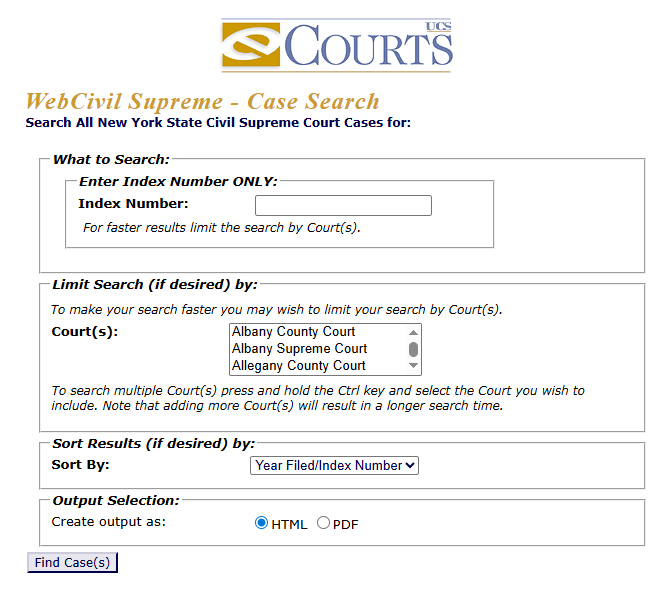
Searching Nassau supreme court cases online offers a fast way to review public case details without visiting the courthouse. New York State provides an official digital system that lists Supreme Court civil cases filed in Nassau County Court and other jurisdictions.
Supreme Court Case Search URL : https://iapps.courts.state.ny.us/webcivil/FCASSearch
This official New York State portal supports court case lookup for Supreme Court civil matters. It displays structured case data pulled directly from court filing systems.
Users can search the database using several reliable methods:
- Index Number Search: Enter the full or partial index number assigned at filing. This method delivers the most accurate results.
- Party Name Search: Use the plaintiff or defendant’s full name. Filters help narrow results by county and year.
- Attorney or Law Firm Name: Useful for tracking litigation handled by a specific legal representative.
- Court and Filing Year Filters: Select Supreme Court and Nassau County to avoid unrelated results.
Search results typically show case status, filing dates, motion history, scheduled appearances, and assigned judges. Many users rely on this public case search tool to monitor progress or confirm court activity. Civil records appear more consistently than criminal matters. Some older cases may show limited entries due to historical record formats.
Jurisdiction & Authority of the Supreme Court
Supreme Court Nassau County NY holds broad legal authority over major civil and criminal matters within county boundaries. It functions as a trial court with power to hear cases that exceed the limits of lower courts. This authority comes from New York State law, which grants the court general jurisdiction over most legal disputes. As a result, the court may hear complex civil lawsuits involving large financial claims, property ownership, contract disputes, and equitable relief. It also presides over serious Criminal Cases, including felony indictments that require jury trials and formal evidentiary hearings.
The court’s trial-level role means cases usually begin here rather than arrive on appeal. Judges oversee pretrial motions, discovery disputes, hearings, and trials from start to finish. They may issue binding orders, verdicts, and judgments that affect parties across Nassau County. The court’s authority extends countywide, covering every town and municipality within its borders. This wide reach separates it from courts with limited subject or monetary scope. Through this structure, the court serves as the primary forum for resolving high-stakes legal matters under the New York Supreme Court authority framework.
Geographic Jurisdiction in Nassau County
The supreme court Nassau county NY exercises authority across the entire county, covering all towns, villages, and cities within Nassau County. Any qualifying case that arises inside county limits may be filed in this court. Venue rules decide which courthouse location handles the matter, based on filing details and case type. This countywide reach supports consistent judicial handling for high-impact disputes. Residents, businesses, and state agencies rely on this court for disputes tied to Nassau County property, contracts, or criminal conduct. This wide court jurisdiction in Nassau County sets it apart from courts with narrower reach.
Legal Authority and Case Scope
The court operates under general jurisdiction, meaning it hears almost any case type unless state law assigns it elsewhere. This authority covers serious criminal cases, including felony indictments, along with complex civil litigation. Judges preside over jury trials, bench trials, motions, and evidentiary hearings, with records and filings managed by the Clerk of Court. Civil matters often involve high monetary claims, injunctions, or property rights. Criminal proceedings may include arraignments, hearings, and full trials after indictment. This trial court authority allows judges to issue binding rulings, orders, and judgments that shape legal outcomes across Nassau County.
Difference From County Court and Civil Court
Court roles in Nassau County follow clear lines. County Court focuses mainly on criminal matters and some civil cases with capped limits. Civil Court handles lower-value disputes, landlord-tenant cases, and small claims. The New York Supreme Court authority extends beyond those limits. It hears cases that demand broader judicial power, longer trials, or jury review. Appeals from lower courts may pass through separate appellate divisions rather than this court. By handling the most complex trials, the Supreme Court stands as the primary venue for disputes that require full judicial review. This structure supports order within the New York State court system and clarifies where cases belong based on scope and severity.
Types of Cases Handled by Nassau County Supreme Court
The Nassau County Supreme Court hears complex criminal and civil cases that require full trial authority. Its caseload reflects matters that exceed the scope of lower courts in seriousness, value, or legal impact. This court operates as a trial forum where records are created, evidence is reviewed, and final judgments are issued. Case types vary widely, yet each falls within the court’s broad jurisdiction.
Felony Criminal Cases
Felony cases represent a core part of the Supreme Court’s criminal docket. In New York, a felony involves an offense punishable by more than one year in state prison. These matters carry higher stakes and demand formal trial procedures. Lower criminal courts handle arrests, arraignments, and early hearings. After that stage, prosecutors present evidence to a grand jury. If the grand jury issues an indictment, the case moves into the Supreme Court for trial-level proceedings.Supreme Court judges oversee motions, hearings, jury selection, and trials. Defendants may face jury verdicts or negotiated plea outcomes. Sentencing takes place after conviction, following state sentencing laws.
Common serious criminal offenses heard here include:
- Violent felonies such as assault or robbery
- Drug-related felonies
- Financial crimes involving large losses
- Felony weapons charges
Civil Litigation & High-Value Disputes
Civil litigation forms another major category of cases handled by the Nassau County Supreme Court. This court hears disputes that exceed monetary limits set for lower civil courts. Many cases involve large financial claims or complex legal questions. Civil litigation in this court shapes outcomes that affect businesses, property rights, and financial responsibilities across the county. These matters often involve extensive filings, discovery, expert testimony, and motion practice. Judges manage cases from initial filings through trial or settlement. Jury trials remain common for contested civil disputes. The Supreme Court hears many complex civil cases in Nassau County because of its broad authority. Injunctions, declaratory judgments, and non-monetary remedies may also be requested. This range of relief separates it from courts limited to smaller claims.
Examples of major civil lawsuits include:
- Contract disputes between businesses
- Personal injury claims with significant damages
- Commercial lawsuits involving corporations or partnerships
- Property ownership and real estate conflicts
Special Proceedings
Beyond standard trials, the court handles several specialized matters. Matrimonial actions such as divorce, custody, and support fall under its authority. Article 78 proceedings review decisions made by government agencies or officials. The court may grant equitable relief, including injunctions or court-ordered actions. These proceedings rely on judicial discretion and formal review rather than jury verdicts. Together, these case types show the wide scope of the Nassau County Supreme Court’s trial authority.
Nassau Supreme Court Case Process
Nassau Supreme Court cases follow a structured process that moves from filing to final judgment. Each stage plays a clear role in how disputes and criminal matters proceed through the trial court. The process begins once a case is formally placed on the court docket, giving the judge authority to manage all future activity. From that point forward, deadlines, filings, and court appearances follow New York State procedural rules.
As cases progress, judges supervise hearings, motion practice, and trial preparation to keep matters moving in an orderly manner. Pre-trial rulings shape what evidence may be used and which legal issues remain in dispute. If a case reaches trial, testimony, exhibits, and legal arguments are presented under strict courtroom procedures. Verdicts or judicial decisions resolve the dispute at the trial level, after which the court enters an official judgment. In criminal matters, sentencing follows; in civil matters, enforcement steps may begin. This structured framework supports fairness, consistency, and accountability throughout the trial court process.
Case Initiation
All Nassau supreme court cases begin with formal case filing. In civil matters, a plaintiff files a summons and complaint with the county clerk. This filing outlines the legal claims and requested relief. The defendant then receives service of process and must respond within the required time. Criminal cases reach the court after indictment. Prosecutors present evidence to a grand jury. Once charges are approved, the case enters the Supreme Court docket. At this point, the court gains authority over all future proceedings. Filing establishes jurisdiction, assigns an index number, and places the case under judicial control.
Pre-Trial Motions
After filing, cases move into the pre-trial stage. Attorneys submit motions that shape how the case moves forward. These requests ask the judge to rule on legal issues before trial. Judges review written arguments and may hold hearings to hear oral positions. Rulings at this stage often narrow the issues for trial. Some cases resolve here through settlement or dismissal. Pre-trial rulings play a major role in the case lifecycle in Nassau Supreme Court proceedings. Common pre-trial activity includes:
- Motions to dismiss
- Requests to suppress evidence
- Discovery disputes
- Scheduling conferences
Trial Phase
If no resolution occurs earlier, the case advances to trial. Civil trials may involve a judge or jury, depending on the claims. Criminal trials almost always involve juries. During trials, both sides present evidence, question witnesses, and submit legal arguments. Judges manage courtroom procedure, rule on objections, and instruct juries on the law. Trials may last days or weeks, based on case scope. At the close of evidence, juries deliberate and return verdicts. In bench trials, judges issue written or oral decisions.
Judgments & Enforcement
After a verdict, the court enters a formal judgment. In criminal cases, sentencing follows under state law. In civil cases, judgments may award damages or grant court-ordered relief. Appeals move to higher courts, not the trial court. By following these stages, Nassau Supreme Court cases progress through a clear and consistent legal process. Enforcement may involve:
- Money judgments
- Property liens
- Court orders
- Compliance hearings
Judges of Nassau County Supreme Court
Judges of the Nassau County Supreme Court preside over major civil and criminal trials across the county. They serve as Supreme Court justices with authority to rule on complex cases from filing through final judgment. Their responsibilities include managing courtroom proceedings, setting schedules, and resolving legal disputes through written decisions or jury verdicts. These judges oversee evidence review, witness testimony, and motion practice throughout each case. Their rulings shape trial outcomes and form the official record for any future appellate review. Through these duties, they maintain consistency and order within Nassau County’s highest trial court.
Role of Supreme Court Judges
The judges assigned to the Nassau County Supreme Court act as trial-level decision makers. They manage court calendars, hear motions, conduct hearings, and oversee jury and bench trials. In criminal matters, justices rule on evidence, supervise trials after indictments, and impose sentences under state law. In civil cases, they resolve disputes involving contracts, injuries, property, and business conflicts. Supreme Court justices issue binding orders and written decisions that affect parties countywide. Their rulings create the official record for any later appellate review. Courtroom control, case scheduling, and procedural rulings all fall within a judge’s authority. This role requires familiarity with New York law and steady courtroom management.
How Judges Are Assigned
Supreme court justices in Nassau County receive judicial assignments based on administrative needs and experience. The court organizes judges into “parts,” each focused on specific case types. Some parts handle felony trials. Others focus on matrimonial actions, commercial litigation, or civil motions. Administrative judges assign cases to parts to balance workload and promote efficiency. Reassignments may occur when caseloads change or judges rotate into new parts. This structure supports consistent handling of similar matters across the court.
Election and Term Lengths
Nassau County Supreme Court justices are elected judges chosen by voters within the judicial district. Each justice serves a 14-year term, one of the longest judicial terms in New York State. This term length supports independence and continuity on the bench. After election, justices may serve in Nassau County or receive temporary assignments elsewhere within the New York Supreme Court system. Retirement age limits apply under state law. By combining long terms, structured assignments, and defined authority, the judges of the Nassau County Supreme Court maintain stability and fairness across high-stakes trials and proceedings.
Appeals from Nassau County Supreme Court
Appeals from Nassau County Supreme Court move cases to a higher court for review of legal rulings. This process allows parties to challenge decisions without retrying the entire case. Appeals focus on whether the trial court applied the law correctly. They do not reweigh evidence or hear new testimony. This structure shapes the Nassau County appellate process from start to finish.
Where Appeals Are Filed
Most appeals from the Nassau County Supreme Court go to the Appellate Division Second Department. This court reviews trial-level decisions issued in Nassau County and nearby counties. It serves as the first appellate forum for Supreme Court matters. The Appellate Division examines written records from the trial court. These records include transcripts, motions, exhibits, and the final order or judgment. Oral argument may occur, though many appeals rely solely on written briefs. In limited situations, further review may move to New York’s highest court after Appellate Division review. That step depends on permission rules and legal standards.
Deadlines and Notice Requirements
The appeal process NY follows strict timelines. A party begins by filing a notice of appeal with the trial court clerk. This notice alerts the court and opposing parties that review is sought. Missing a deadline may end the right to appeal. For that reason, timing plays a central role when appealing a supreme court decision. After notice, the appellant prepares the record and submits written briefs under court schedules. Time limits vary by case type:
- Civil appeals often require notice within 30 days of service of the order or judgment
- Criminal appeals follow shorter timelines set by statute
Civil vs Criminal Appeal Paths
Civil and criminal appeals follow different procedural paths. Civil appeals usually focus on legal errors, procedural rulings, or interpretation of law. Remedies may include reversal, modification, or a new trial order. Criminal appeals often review trial fairness, evidentiary rulings, or sentencing issues. Defendants may challenge convictions or sentences. Prosecutors face limits on appeal rights. Both paths rely on the same appellate court but apply different standards of review. Civil cases emphasize legal interpretation. Criminal cases place weight on constitutional protections. Through this process, appellate courts provide oversight and consistency across Supreme Court rulings in Nassau County.
Difference Between Nassau Supreme Court & Other Courts
The Nassau County Supreme Court handles the most complex trials, while other county courts focus on limited case types. Each court serves a defined role based on jurisdiction, authority, and subject matter. The New York court system assigns cases based on seriousness, dollar value, and legal scope. Knowing these differences helps readers place each court correctly within Nassau County.
How Nassau Supreme Court Compares to Other Courts
The Nassau County Supreme Court acts as a trial court with broad authority. It hears felony prosecutions, major civil lawsuits, and matters that require full judicial review. Other courts operate with narrower powers and more specific case limits. Below is a clear comparison of court roles within Nassau County:
| Court Name | Main Jurisdiction | Case Types Handled | Authority Level |
|---|---|---|---|
| Nassau Supreme Court | Countywide | Felonies, major civil lawsuits, matrimonial actions, equity cases | General jurisdiction |
| County Court Nassau | Countywide | Criminal cases, limited civil matters | Restricted by statute |
| District Court | Local districts | Misdemeanors, traffic cases, small civil claims | Limited jurisdiction |
| Family Court | Countywide | Custody, support, abuse, neglect | Family-related matters only |
| Surrogate’s Court | Countywide | Estates, wills, probate, trusts | Estate and probate matters |
Official Location
The Nassau County Supreme Court is located in Mineola, which serves as the central judicial hub for Supreme Court matters in Nassau County. This courthouse handles felony criminal trials, major civil litigation, matrimonial actions, and other proceedings that fall under Supreme Court jurisdiction. Most filings, hearings, and jury trials connected to Supreme Court cases take place at this location.
Official Courthouse Address
- Nassau County Supreme Court
- 100 Supreme Court Drive, Mineola, NY 11501
This Mineola Supreme Court building houses courtrooms, judge chambers, jury facilities, and administrative offices that support trial-level proceedings. Case assignments depend on the judge and court part rather than residential location within the county. Visitors attending hearings or trials should confirm their assigned courtroom before arrival. The Mineola location remains the primary and most frequently used Supreme Court courthouse in Nassau County for both civil and criminal matters.
Frequently Asked Questions
Is Nassau County Supreme Court the highest court in New York?
Nassau County Supreme Court is not the highest court in New York. It functions as a trial-level court within the state judiciary. Many cases begin at this court rather than end here. The court hears evidence, motions, and full trials. Decisions issued here may be reviewed by a higher court. Appeals usually move to the Appellate Division Second Department. That appellate court reviews legal rulings made at trial. A separate court sits at the top of the state system. This structure applies statewide, including Nassau County.
Can the public view felony case records online?
Public viewing of felony case information remains limited online. Some basic case details may appear in state court systems. These details often include appearance dates or case status. Full filings and evidence records usually stay restricted. Privacy rules protect sensitive criminal information. Indictments may not display in full online listings. Older cases may show partial summaries only. More complete records are kept at the courthouse. The clerk’s office manages official criminal case files.
How long do civil cases usually take?
Civil cases in Nassau County Supreme Court follow varying timelines. Simple disputes may resolve within several months. More complex matters often extend longer. Discovery schedules affect how fast cases move. Motion practice may add additional time. Court calendars influence hearing availability. Settlement discussions may shorten the process. Trials usually lengthen overall case duration. Each civil case proceeds on its own procedural track.
Is a lawyer required for Supreme Court cases?
The court does not require parties to hire a lawyer. Individuals may represent themselves in civil matters. Court rules still apply to self-represented parties. Judges do not provide legal advice from the bench. Felony cases often involve assigned or retained counsel. Civil litigation may involve detailed filings and motions. Many parties choose legal representation for complex disputes. The decision depends on case risk and scope. Responsibility for compliance rests with each party.
Where do appeals from this court go?
Appeals from Nassau County Supreme Court usually go to the Appellate Division Second Department. This appellate court reviews trial-level decisions. The review focuses on legal issues raised during trial. Evidence is examined through transcripts and records. New testimony does not take place on appeal. Strict filing deadlines apply to appeal notices. Written briefs form the core of appellate review. Oral argument may occur in some cases. The trial court does not review its own decisions.
Where is the Nassau County Supreme Court located?
The Nassau County Supreme Court is located in Mineola, New York. This site serves as the county’s main trial courthouse. Felony and major civil trials are heard there. Judges and court staff work from this location. Courtrooms and clerk offices operate within the complex. Security screening applies at building entrances. Visitors should confirm courtroom assignments before arrival. Most Supreme Court filings are processed here. Mineola remains the primary judicial center for Nassau County.