Criminal Cases in Nassau County refer to legal actions where the state brings charges for conduct defined as a crime under New York law. These cases move through local criminal courts NY and form a major part of daily court activity. Each case begins after an arrest or formal charge and then follows a set criminal law process overview shaped by state statutes and court rules. Charges may involve violations, misdemeanors, or felonies, depending on the alleged act and prior history. At each stage, the court reviews evidence, schedules appearances, and records outcomes in public case files. The criminal justice system Nassau County uses aims to process cases efficiently while respecting procedural rights. For many readers, this topic explains how criminal cases Nassau County NY courts handle move from filing to resolution.
Criminal Cases in Nassau County also matter due to their impact on people and the community. Defendants face court dates, conditions, and possible penalties that may affect work and family life. Families often search for plain explanations to follow case progress and common terms. Researchers and reporters review criminal cases Nassau County NY data to track trends, filings, and outcomes. Residents often seek context on how criminal courts respond to local crime patterns. The criminal justice system Nassau County operates relies on transparency and public trust, which grows through clear, factual information. This page serves readers who want structured knowledge without opinions or legal direction. It explains roles of courts, typical case paths, and public records tied to criminal filings.
Accessing & Searching Nassau County Criminal Case Records
Nassau County criminal case records show public court activity for criminal matters filed in local courts. These records help users review charges, case status, and court dates using official New York State systems. Criminal court records Nassau County Court maintains are part of the New York State Unified Court System. They serve defendants, families, researchers, and members of the public seeking verified court data. Records appear through official online tools and court clerk offices, with limits set by state law. The sections below explain where records come from, how to search Nassau County criminal cases step by step, and what information is visible.
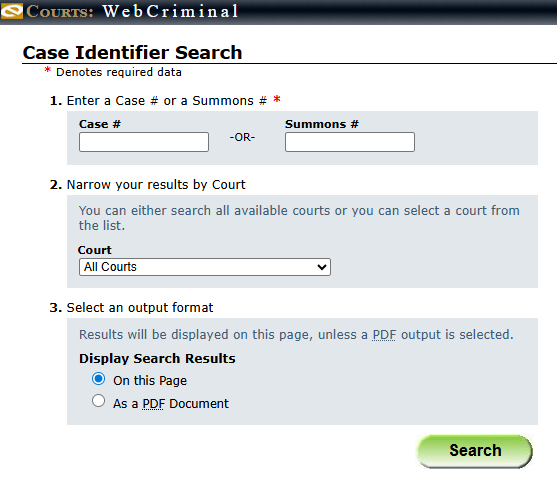
Open the Official Search URL
Go to: https://iapps.courts.state.ny.us/webcriminal/
Choose a Search Method
The tool offers several search options:
- Defendant Name Search
- Case or Docket Number Search
- Date-based search filters (availability varies)
Enter Search Details
For a name search:
- Enter the last name
- Enter the first name if available
- Select Nassau County when prompted
For a case number search:
- Enter the full docket or case number
- No name entry is required
Submit the Search
Select the search button and wait for results to load. Processing time may vary based on query size.
Review Search Results
Search results usually display:
- Docket or index number
- Defendant name
- Charge description
- Court location
- Next scheduled court date
- Case status (open, disposed, adjourned)
View Case Details
Case detail pages may show:
- Charge level (violation, misdemeanor, felony)
- Event history and court appearances
- Assigned court or part
- Filing dates
In-Person Criminal Court Record Requests
Some criminal court records Nassau County offices hold do not appear online. In-person requests may help with older cases or document copies.
Common locations include:
- Nassau County Clerk offices
- Criminal court clerk counters at filing courthouses
Certified copies include a court seal and signature. Fees often apply. Requests may require:
- Defendant name
- Case number
- Filing year
Privacy Limits on Public Criminal Records
Public criminal records follow New York disclosure rules. Some records remain restricted.
Examples include:
- Sealed cases
- Youthful offender matters
- Expunged files
- Redacted personal details
What This Search Tool Is Used For
Users often search nassau county criminal case records for:
- Case tracking
- Court date confirmation
- Background research
- Record verification
Types of Criminal Cases in Nassau County
Felony and misdemeanor cases in Nassau County describe how criminal charges are grouped based on seriousness and possible penalties. These categories shape how cases move through local criminal courts and what outcomes may apply. Criminal charge categories in Nassau County follow New York Penal Law. Each category reflects the nature of the alleged conduct, risk to public safety, and prior history. Courts review these cases through set procedures that vary by charge level. The sections below explain the main types of criminal cases filed in Nassau County and how they differ.
Felony Criminal Cases
Felony cases Nassau County Court handle involve the most serious criminal allegations. These cases often include violent crimes or repeat offenses that carry long-term consequences. Felonies may result in state prison sentences, extended supervision, or significant fines. Due to the severity, these cases often begin in lower courts and later move to higher trial courts for further proceedings. Felony cases usually involve multiple court appearances, hearings, and detailed record keeping. Court records reflect each step, from arraignment to final disposition.
Common examples of felony cases include:
- Violent crimes such as robbery, assault with serious injury, or homicide
- Major non-violent offenses like large-scale fraud or burglary
- Drug-related charges involving distribution or large quantities
Misdemeanor Criminal Cases
Misdemeanor cases Nassau County courts process involve less severe charges than felonies, yet still carry criminal penalties. These cases make up a large share of filings in local criminal courts NY. Misdemeanors may involve jail sentences of up to one year, probation, or fines. Many non-violent offenses fall into this category, though some involve physical harm. Misdemeanor cases often move faster than felony cases. Many resolve through plea agreements or short trials. Records usually show charge details, court dates, and outcomes.
Typical misdemeanor cases include:
- Petty theft
- Simple assault
- Driving-related criminal charges
- Low-level drug possession
Violations & Infractions
Violations and infractions represent the lowest level of criminal charge categories in Nassau County. These cases do not carry jail time, though fines or short-term penalties may apply. Infractions still appear in public criminal court records Nassau County maintains. Courts handle these cases quickly, often in a single appearance. Payment of fines or compliance with court orders usually resolves the matter.
Common violations include:
- Traffic-related offenses
- Disorderly conduct
- Local code violations
Why Charge Categories Matter
During a criminal arrest NY officers must identify themselves and state the reason for the arrest. The person is then taken into police custody. From this moment, the case enters the criminal justice process and moves toward formal criminal charges filed by the state. Officers may conduct a limited search for safety and secure personal belongings for inventory. The individual’s location and time of arrest are documented in police records. Communication with a supervisor or central system often follows to log the arrest details. The person may be transported to a local precinct or holding facility based on the arrest location and charge type. Medical screening may occur if health concerns appear. These steps create the initial record that courts later rely on during early case proceedings.
Arrest Process in Nassau County Criminal Cases
The arrest process in Nassau County explains how police take a person into custody after a suspected criminal act. This process follows New York law and sets the foundation for how criminal charges move forward. The arrest process Nassau County law enforcement follows applies to many criminal arrest NY situations, from minor offenses to serious allegations. Each step focuses on identifying the person, recording details, and deciding next actions. The sections below explain when an arrest occurs, what happens during booking, and how release or detention decisions take place.
When an Arrest Occurs
An arrest occurs when police believe a person committed a crime and have legal grounds to act. Officers may make an arrest at the scene, after an investigation, or based on a court-issued warrant. In some cases, police issue a desk appearance ticket instead of taking the person into police custody. During a criminal arrest NY officers must identify themselves and state the reason for the arrest. The person is then taken into police custody. From this moment, the case enters the criminal justice process and moves toward formal criminal charges filed by the state.
Common reasons for arrest include:
- Being caught during an alleged offense
- Identification through witness statements or evidence
- Execution of an active arrest warrant
Booking & Fingerprinting
After an arrest, the person goes through the booking process at a police station or holding facility. Booking creates an official record of the arrest and links the person to the alleged offense. Fingerprints are checked against state and national databases. This step confirms identity and may reveal prior records. Booking information becomes part of public criminal court records Nassau County maintains, subject to disclosure rules. The length of booking varies based on case type, workload, and facility procedures.
The booking process often includes:
- Recording personal details such as name and date of birth
- Photographing the individual (mugshot)
- Fingerprinting for identification
- Listing alleged criminal charges filed
Release vs Detention
After booking, officials decide whether the person remains in custody or is released. This decision depends on charge severity, prior history, and court availability. Judges review detention status during arraignment, which usually happens within a short time after arrest. Serious charges often result in longer detention periods, while lower-level offenses may lead to prompt release.
Possible outcomes include:
- Release on recognizance: The person leaves custody with a promise to appear in court.
- Bail set: Release occurs after posting bail.
- Continued detention: The person stays in custody until a court appearance.
Arraignment in Nassau County Criminal Court
Arraignment in Nassau County marks the first court appearance after an arrest. During this criminal court arraignment, charges are formally presented and early release decisions are made. Arraignment Nassau County criminal courts handle usually takes place shortly after arrest. This stage introduces the case into the court system and sets initial conditions that affect the next steps. The process follows New York criminal procedure and applies to both misdemeanor and felony filings.
What Happens at Arraignment
A criminal court arraignment begins with the judge calling the case and confirming the defendant’s identity. The court then reads the criminal charges filed by the prosecution. These charges reflect the allegations listed in police and arrest records. In many cases, defense counsel appears with the defendant. If no attorney is present, the court may assign counsel based on eligibility. The judge may set future court dates and explain basic case expectations. This first court appearance creates an official record that becomes part of public criminal court records Nassau County maintains.
After charges are read, the defendant enters a plea. Common plea entries include:
- Not guilty
- Guilty
- No contest (when permitted)
Bail, ROR, or Remand
A key part of arraignment Nassau County courts conduct involves custody decisions. The judge reviews whether the defendant remains in custody or is released. Judges review factors such as charge level, prior court history, and public safety considerations. Bail hearings may take place during the arraignment itself. Decisions may change later as the case develops.
Possible outcomes include:
- Release on recognizance (ROR): The defendant leaves court with a promise to return.
- Bail set: Release occurs after bail is posted under court terms.
- Remand: The defendant stays in custody until the next court date.
Defendant Rights at Arraignment
Defendants hold specific rights during a criminal court arraignment. These rights protect fairness and due process. The court may explain these rights on the record. Any conditions set during arraignment apply until modified by the court.
Key rights include:
- The right to hear and receive copies of the charges
- The right to legal representation
- The right to enter a plea
- The right to request release consideration
Prosecution Process in Nassau County Criminal Cases
The prosecution process in Nassau County explains how the state moves a criminal case forward after arrest and arraignment. This process centers on evidence review, legal standards, and formal decisions made by prosecutors. Prosecution Nassau County criminal courts rely on follows New York criminal procedure. The state carries the duty to present facts and pursue charges through the court system. Each step focuses on fairness, accuracy, and public accountability. The sections below explain who leads the prosecution, how evidence enters a case, and how filing decisions take shape.
Role of the Nassau County District Attorney
The Nassau County District Attorney leads the criminal prosecution process on behalf of the state. This office represents the public interest and appears in Nassau County District Court criminal proceedings from arraignment through resolution. Assistant district attorneys handle daily court appearances and case preparation. Their work includes reviewing arrest reports, coordinating with law enforcement, and preparing court filings. The district attorney role includes deciding which charges move forward and how each case proceeds. The prosecutor does not represent victims or defendants. The focus remains on presenting the state’s case within established legal limits.
Core responsibilities include:
- Reviewing criminal charges filed by police
- Presenting the case during court appearances
- Managing plea discussions or trial preparation
- Maintaining records tied to criminal court proceedings
Evidence Collection
Criminal case evidence forms the foundation of prosecution Nassau County courts conduct. Evidence may come from law enforcement, witnesses, or technical sources. Evidence collection begins early and continues through the case. Prosecutors review materials to confirm relevance and reliability. Evidence must meet legal standards before presentation in court. The burden of proof rests with the prosecution. This means the state must support each charge with sufficient facts. Courts review evidence during hearings, motions, or trials based on case progress.
Common types of evidence include:
- Police reports and arrest documentation
- Witness statements
- Physical items connected to the alleged offense
- Digital records such as video or phone data
Case Evaluation & Filing Decisions
Case evaluation guides the criminal prosecution process from start to finish. Prosecutors assess evidence strength, charge level, and legal requirements before moving forward. Filing decisions shape how the case continues in court. Some cases move toward plea resolution, while others prepare for trial. Decisions may change as new information appears or legal rulings occur. Public criminal court records Nassau County maintains often reflect these changes through updated dockets and filings.
During evaluation, prosecutors may:
- Maintain original charges
- Adjust charge levels
- Decline to proceed with certain allegations
Pre-Trial Hearings & Motions
The criminal pretrial process covers court activity that takes place after arraignment and before trial. These steps shape how evidence is reviewed and which issues the court will decide in advance. Pre-trial activity plays a key role in criminal cases filed in Nassau County. Judges, prosecutors, and defense counsel use this stage to address disputes, exchange information, and narrow the issues for trial or resolution. The focus stays on procedure, evidence, and legal motions tied to the case record.
The Discovery Process
Discovery is a structured exchange of information between the prosecution and defense. This process allows both sides to review criminal case evidence before trial dates are set. Courts set deadlines for discovery exchange. Judges may review compliance during scheduled appearances. Discovery helps clarify facts and supports informed court decisions later in the case.
Discovery materials often include:
- Police reports and arrest records
- Witness statements
- Photographs or video footage
- Laboratory or technical reports
Court Motions in a Criminal Case
Court motions criminal case filings allow either side to request a legal ruling from the judge. Motions raise issues that affect how the case proceeds. Each motion appears in the court docket and becomes part of public criminal court records Nassau County maintains. Judges review written arguments and may schedule hearings before issuing decisions.
Common legal motions include:
- Motions to dismiss certain charges
- Motions to exclude evidence
- Requests for schedule changes
Suppression Hearings
Suppression hearings focus on whether certain evidence may be used in court. These hearings often examine how police obtained evidence during searches, questioning, or arrest. Judges listen to testimony and review records before ruling. If evidence is excluded, it cannot be presented later. These rulings may influence plea discussions or trial preparation.
During suppression hearings, the court may review:
- Arrest procedures
- Search methods
- Statements made in police custody
Purpose of Pre-Trial Proceedings
The criminal pretrial process helps organize cases and address disputes early. It reduces trial delays and clarifies which facts the court will hear. Judges use this stage to manage timelines, review compliance with court orders, and confirm that both sides follow required procedures. Pre-trial proceedings help narrow disputed issues, which shortens hearings and trial time. They allow the court to resolve legal questions before jurors become involved. This process supports accurate scheduling and efficient courtroom use. Clear rulings at this stage shape how evidence is presented later and help the court maintain consistent case flow.
Trial Process in Nassau County Criminal Cases
A criminal trial in Nassau County is the court stage where evidence is presented and guilt or non-guilt is decided. Trials follow set courtroom rules and may involve a judge alone or a group of jurors. Criminal trial Nassau County courts conduct begins after pre-trial activity ends and the case is ready for presentation. Trials focus on facts, witness testimony, and exhibits tied to the alleged offense. New York law sets the structure for each step, and court records reflect actions taken during the proceedings.
Bench vs Jury Trial
Two main trial formats exist in Nassau County criminal courts.
A bench trial takes place when a judge hears the case without a jury. The judge reviews evidence, listens to witnesses, and issues a verdict. Bench trials often occur in cases with limited factual disputes or by request of the parties. A jury trial NY criminal courts conduct involves a panel of jurors selected from the community. Jurors review evidence and decide the verdict after court instructions. Jury selection begins with questioning potential jurors to confirm fairness and eligibility. Both formats follow the same legal standards.
Key differences include:
- Judge decides facts in a bench trial
- Jurors decide facts in a jury trial
- Jury trials usually take more time
Trial Stages
A criminal trial Nassau County courts hold follows a structured sequence. During trial stages, judges rule on objections and manage courtroom order. Witness testimony forms a central part of the record. Transcripts and exhibits become part of official court files.
Common stages include:
- Opening statements: Each side outlines its position and the evidence expected.
- Witness testimony: Witnesses testify under oath. Attorneys ask questions and present exhibits.
- Cross-examination: Each witness may face questions from the opposing side.
- Closing arguments: Attorneys summarize evidence and rest their cases.
Verdict Outcomes
After evidence presentation ends, the decision phase begins. In a bench trial, the judge issues a verdict on the record. In a jury trial, jurors deliberate in private and return a decision to the court. Verdicts must meet the burden of proof standard set by law. A verdict concludes the trial stage. Sentencing or further hearings may follow based on the result. Court records update to reflect the outcome and any scheduled next steps.
Possible verdict outcomes include:
- Guilty
- Not guilty
- Partial verdict on some charges
Sentencing in Nassau County Criminal Cases
Sentencing in Nassau County sets the legal outcome after a guilty plea or verdict. This stage decides penalties based on law, case facts, and court findings. Criminal sentencing NY courts follow takes place after trial or plea resolution. Judges apply state sentencing guidelines and review case records before issuing a sentence. The purpose is to assign a lawful penalty that matches the offense and court history. Public criminal court records Nassau County maintains reflect sentencing decisions and conditions.
Sentencing Factors
Judges review several factors during sentencing Nassau County criminal courts conduct. These factors help the court decide the type and length of punishment. Felony and misdemeanor cases follow different sentencing ranges under New York law. Judges may review reports prepared by court services or probation departments. Statements from the prosecution and defense may appear on the record. Victim impact statements may also be reviewed when allowed by law. Sentencing guidelines set limits on penalties. Judges must stay within these limits unless the law permits variation.
Common sentencing factors include:
- Severity of the offense
- Use of force or harm
- Prior criminal history
- Impact on victims
- Compliance during court proceedings
Possible Penalties
Criminal sentencing NY courts issue may include several types of penalties. The sentence depends on the charge level and statutory rules. Felony cases often carry longer terms. Misdemeanor cases may involve shorter jail terms or probation supervision. Violations usually result in fines or non-custodial penalties. Sentences are announced in open court and entered into the case docket.
Common penalties include:
- Jail or prison time: Length depends on offense class
- Probation: Court supervision in place of incarceration
- Jail vs probation combinations: Split sentences for certain cases
- Fines and penalties: Monetary amounts set by statute
- Community service: Hours assigned by the court
Post-Sentencing Conditions
After sentencing, courts may impose conditions that apply for a set period. These conditions form part of the official sentence. Failure to meet conditions may result in further court action. Probation departments monitor compliance and report status to the court. Records update when conditions end or change.
Post-sentencing conditions may include:
- Regular reporting to probation officers
- Attendance at court-approved programs
- Compliance with no-contact or location limits
- Payment schedules for fines and fees
Appeals & Post-Conviction Options
A criminal appeal in Nassau County allows review of a conviction or sentence after the trial court issues a final decision. Post conviction relief options focus on legal errors, sentence terms, or procedural issues raised after judgment. Criminal appeal Nassau County cases follow New York appellate procedure. Appeals do not retry facts or hear new witnesses. The appellate court reviews the trial record to decide whether legal mistakes affected the outcome. Post conviction relief may apply even after appeal rights expire, based on limited grounds set by law.
Criminal Appeals in Nassau County
A criminal appeal begins after sentencing. The convicted party files a notice of appeal within set appeal deadlines. These deadlines are strict and tied to the date of judgment. Appeals move to an appellate court rather than the original trial court. The appellate court reviews written briefs and, in some cases, oral argument. The review focuses on legal rulings, jury instructions, evidence rulings, or sentencing issues. The appellate court may affirm the conviction, reverse it, or order further proceedings.
Common appeal issues include:
- Legal errors during trial
- Improper admission or exclusion of evidence
- Errors in jury instructions
- Sentencing errors under state law
Post Conviction Relief Options
Post conviction relief covers court requests filed after direct appeal rights end or alongside an appeal. These requests focus on issues not raised earlier or issues outside the trial record. These filings return to the trial court or move through separate review channels based on the claim type. Courts review written submissions and issue rulings based on law and record content.
Post conviction relief may involve:
- Claims tied to constitutional violations
- Newly discovered evidence meeting legal standards
- Requests for sentence modification
- Challenges tied to procedural defects
Sentence Review and Modification
Sentence modification requests seek review of sentence terms rather than guilt findings. Courts review these requests under limits set by statute. Relief may involve reduced terms, adjusted conditions, or clarification of sentencing orders. Not every case qualifies for sentence modification. Eligibility depends on charge level, sentence type, and timing.
Rights of Defendants in Nassau County Criminal Cases
Defendant rights in NY protect people charged with crimes throughout every stage of a court case. These criminal defendant rights come from the U.S. Constitution, New York law, and court procedure rules. In Nassau County criminal cases, courts must respect these rights from arrest through final resolution. The goal is fair treatment, accurate fact-finding, and lawful outcomes. Rights apply equally in misdemeanor and felony cases and remain in place regardless of charge severity.
Constitutional and Due Process Rights
All defendants hold constitutional rights that shape how cases proceed. Due process requires the court system to follow lawful procedures and treat defendants fairly at every stage. Courts must follow established rules for arrests, hearings, and trials. Any deviation may affect how evidence is used or how a case continues.
Core due process protections include:
- The right to receive notice of criminal charges
- The right to a public court proceeding
- The right to a neutral judge
- The right to challenge evidence presented by the state
Right to an Attorney
One of the most important criminal defendant rights is the right to attorney representation. Defendants may retain private counsel or receive assigned counsel if they qualify. Attorneys speak on behalf of defendants, review evidence, file motions, and address the court. If a defendant appears without counsel at early stages, the court may assign one based on eligibility standards.
This right applies during:
- Police questioning after custody begins
- Arraignment and all court appearances
- Hearings, trial, and sentencing
Trial and Evidence Rights
Defendants hold several rights tied to trial procedure and evidence review. Witness testimony must occur under oath, and cross-examination is permitted. The burden of proof remains with the prosecution at all times.
These include:
- The right to remain silent
- The right to confront witnesses
- The right to present witnesses and evidence
- The right to a jury trial in qualifying cases
Protection Against Unlawful Punishment
Criminal defendant rights protect against unlawful penalties. Sentences must follow statutory limits and sentencing rules set by law. Courts may not impose punishment beyond what the charge level allows. Judges must state the sentence on the record so it becomes part of the official case file. Conditions tied to probation or supervision must match what the law permits. Defendants may raise concerns if a sentence exceeds legal limits or conflicts with required procedure. Review options include appeal and post-conviction filings, which allow courts to examine sentencing errors, calculation mistakes, or improper conditions. These protections support fairness and consistency across criminal cases in Nassau County.
Structure of the Nassau County Criminal Court System
Nassau County criminal court refers to the network of courts that handle criminal matters based on charge level and case type. This system follows a defined criminal court hierarchy set by New York law. Criminal court Nassau County NY operations reflect the wider New York criminal courts structure. Each court handles specific charges and stages of a case. Knowing which court hears which matter helps readers follow filings, hearings, and case movement. The sections below explain how courts divide responsibility for misdemeanors, felonies, and higher-level criminal matters.
Nassau County District Court
The Nassau County District Court handles most lower-level criminal cases. These include misdemeanors, violations, and initial felony appearances. High case volume makes this court central to daily criminal proceedings. Misdemeanor cases often resolve entirely in District Court. Records show court dates, pleas, and outcomes. Judges in this court manage scheduling, bail decisions, and pre-trial activity for qualifying cases.
District Court responsibilities include:
- Arraignments for misdemeanor charges
- Hearings tied to violations and infractions
- Early felony appearances before transfer
Nassau County Court
Nassau County Court handles felony cases after early proceedings conclude. Felonies involve serious allegations and carry higher sentencing ranges. Cases reach County Court through indictments or transfers. Proceedings often involve extended timelines and detailed records. Felony case files reflect motions, hearings, and trial results. This court forms a key part of the criminal court hierarchy in Nassau County.
County Court functions include:
- Felony trials
- Pre-trial hearings tied to felony charges
- Sentencing after felony convictions
Role of Supreme Court in Criminal Matters
The New York Supreme Court also plays a role in criminal matters within Nassau County. Despite its name, it serves as a trial-level court for certain serious cases. Supreme Court judges hold authority equal to County Court judges in criminal cases. Assignment depends on case type and administrative needs.
Supreme Court criminal involvement may include:
- Complex felony trials
- Multi-defendant cases
- Special jurisdiction matters
Frequently Asked Questions
This FAQ section addresses common questions about Nassau County criminal cases and the New York criminal court process. It is designed to help readers understand timelines, court structure, procedures, and public access to records. The answers below provide general informational guidance based on how criminal cases typically move through Nassau County courts, from arraignment to resolution. While every case is unique, these questions reflect issues frequently raised by defendants, families, and individuals searching court records or tracking a criminal case.
How long does a criminal case take in Nassau County?
The length of a criminal case in Nassau County depends on the charge type, court workload, and procedural steps. Violations and infractions often resolve quickly, sometimes within one or two court appearances. Misdemeanor cases usually take several months as they move through arraignment, pre-trial hearings, and possible resolution. Felony cases often take longer due to indictments, evidence review, hearings, and trial scheduling. Court calendars, motion filings, and witness availability affect timing. Delays may occur if evidence review takes longer or court dates are adjourned. No fixed criminal case timeline applies to every matter. Public court records usually show upcoming dates and current status, which helps readers track progress. Each case follows its own path within the Nassau County criminal court system.
Where do criminal cases start in Nassau County courts?
Most criminal cases in Nassau County begin in the Nassau County District Court. This court handles arraignments for misdemeanors, violations, and early felony matters. After arrest, the first court appearance takes place here, where charges are read and custody status is reviewed. Felony cases do not remain in District Court permanently. After required filings, felony matters move to Nassau County Court or Supreme Court for further proceedings. Court records reflect each stage and any transfer between courts. This structure follows the New York criminal courts hierarchy and helps manage case volume. Knowing where a case starts helps readers follow filings, court dates, and jurisdiction changes shown in public records.
What happens at a criminal court arraignment?
A criminal court arraignment is the first appearance after arrest. During this proceeding, the judge confirms the defendant’s identity and reads the criminal charges. The defendant then enters a plea, which is recorded in the court docket. The court reviews custody status and decides release terms, bail, or continued detention. Defense counsel may appear with the defendant, or the court may assign counsel if eligibility applies. Future court dates are scheduled, and basic case expectations are stated on the record. Arraignment creates the official starting point of the court case. Records from this appearance often appear in online court systems and help the public follow early case activity.
Do all Nassau County criminal cases go to trial?
Not all criminal cases in Nassau County reach trial. Many cases resolve earlier through plea agreements, dismissal, or other court rulings. Trials occur when factual disputes remain and no resolution takes place during pre-trial proceedings. Two trial formats exist: bench trials, where a judge decides the case, and jury trials, where jurors determine the verdict. Jury trials involve jury selection, witness testimony, and deliberation. Trials require more court time and preparation than earlier stages. Court records show whether a case is set for trial or resolved beforehand. The decision to proceed to trial depends on charge type, evidence strength, and procedural rulings.
Can the public view Nassau County criminal court records?
Many Nassau County criminal court records are open to public viewing. Online systems show docket information such as charges, court dates, and case status. Some records remain restricted due to sealing orders, youth-related matters, or privacy rules. Full documents may not appear online and sometimes require in-person requests at clerk offices. Certified copies carry a court seal and often involve a fee. Public access rules follow New York law and vary by case type. Records update as cases move through court stages. Public record availability helps support transparency while balancing legal privacy limits.